
Hosted vs Self-Hosted Headless CMS: Which One Actually Wins
Hosted vs self-hosted headless CMS: real costs, per-seat pricing, data residency, and when each one wins for a growing team.
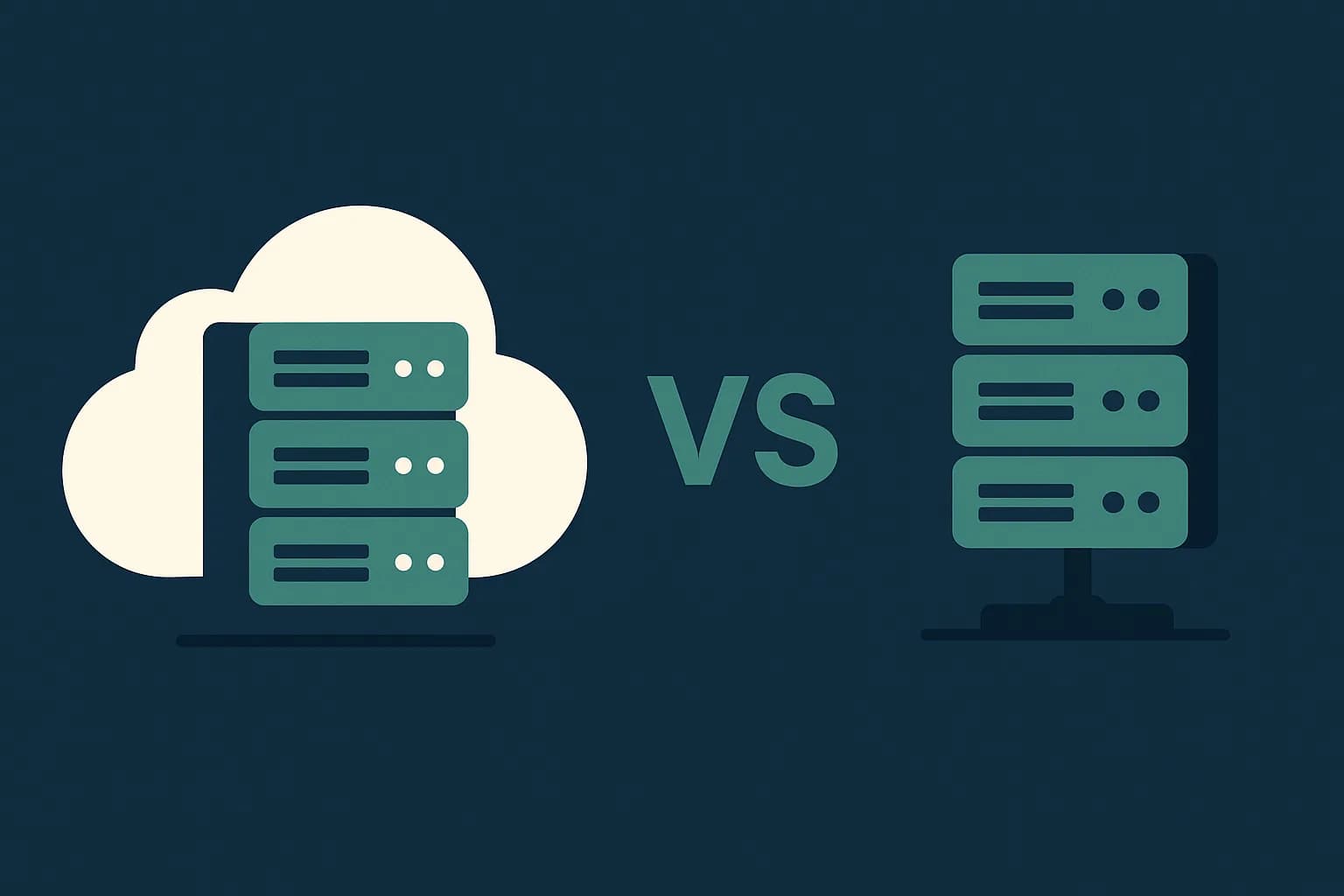
Hosted headless CMS wins on speed to launch and zero ops work. Self-hosted wins on cost at scale, data control, and no vendor shutdown risk. Neither is free. Self-hosting swaps a monthly invoice for engineer hours, and those hours have a real dollar cost even when nobody writes an invoice for them.
Most comparisons stop at "hosted costs more per month." That's true, but it skips the actual decision. The real question is what you'd rather pay in. Cash every month is one option. Server maintenance, security patches, and the 2am page when a self-hosted instance falls over is the other.
What "hosted" actually means
A hosted headless CMS runs on the vendor's servers. You get a login, an API key, and a bill. Sanity, Contentful, and Draftbase all work this way. There's no server to patch and no database to back up. A support team picks up the phone when something breaks. The tradeoff is that pricing usually scales with seats, API calls, or both, and you're trusting a third party with your content.
What "self-hosted" actually means
Self-hosting means you run the CMS on your own servers, whether that's a $6/mo VPS or a Kubernetes cluster. Strapi and Payload are both MIT-licensed and free to run this way. You own the database. You own the uptime. You own every security patch from the day you deploy.
That ownership is the whole pitch, and it's a real one. It's also a job. Someone has to apply the patches. Someone watches the disk usage, and answers the page when the database runs out of space at 2am on a Saturday.
Where hosted wins
Hosted platforms win when engineer time is the scarce resource, not money. A small team with no dedicated ops person ships faster on a hosted CMS. There's no server to configure before the first entry gets created. Scheduled publishing, revision history, and webhooks come built in, instead of being features someone has to wire up and maintain.
Support is the other real advantage. When a hosted CMS goes down, the vendor's team is paged, not yours. That's worth real money once you count the hours a small team would otherwise spend debugging infrastructure instead of shipping product.
Where self-hosted wins
Self-hosting is not free. It's payroll. But three real advantages make that payroll worth it for the right team.
No per-seat pricing
Sanity charges per seat on paid tiers. Contentful's enterprise pricing scales the same way. A content team of 20 editors pays for 20 seats every month, forever. A self-hosted Strapi or Payload instance has no seat count at all. Add 20 more editors tomorrow and the infrastructure bill doesn't move.
Data residency
Some compliance rules require data to stay in a specific country or region. A hosted vendor's servers live where the vendor decided to put them, not where your legal team needs them. Self-hosting puts the database wherever you deploy it, full stop. For a regulated industry, this single point can decide the whole question before price ever comes up.
No vendor shutdown risk
A hosted vendor can raise prices, get acquired, or shut down. When that happens, your content lives on someone else's timeline, not yours. A self-hosted instance runs until you turn it off. The code is yours, the database is yours, and no pricing page change can force a migration on a deadline you didn't pick.
The real cost of self-hosting
Here's the part most comparisons skip. A $5/mo VPS is not the cost of self-hosting. It's the cost of the server. The actual cost is a person. Someone applies security patches. Someone handles the database backup, the kind that actually restores when tested. Someone gets paged when the instance goes down during a launch.
Price that at even a few hours a month of a developer's time, and the math shifts. A "free" self-hosted CMS often costs more than a mid-tier hosted plan once the hours add up. That math flips again once a team scales past 15 or so editors, where hosted per-seat pricing starts to sting more than the ops hours do. There's no universal answer. There's a crossover point, and it depends on your team's size and how expensive an hour of your engineering time actually is.
What breaks in production when nobody owns the ops work
A self-hosted CMS fails quietly at first. A dependency update ships a breaking change, and nobody notices until the admin UI throws a blank screen. A database disk fills up over six months of unpruned revision history, and the CMS goes read-only mid-launch. TLS certificate renewal is automated until the automation script itself breaks, and then a marketing page starts throwing browser security warnings.
None of these are exotic. They're the ordinary failure modes of any self-managed service, and a hosted vendor absorbs every one of them as part of the subscription. The question worth asking before choosing self-hosted isn't "can we set this up." It's "who gets paged in six months when the automation nobody's touched since launch quietly stops working."
Teams that self-host successfully usually have one thing in common. Someone already owns server ops for something else, and the CMS is one more system on a list they already maintain. Teams that struggle are the ones treating self-hosting as a one-time setup task instead of an ongoing job. Say nobody on the team currently owns a database backup or a TLS renewal for anything else. That's a signal the ops cost will land as unplanned time, not planned budget.
Hosted vs self-hosted, side by side
| Hosted | Self-hosted | |
|---|---|---|
| Per-seat pricing | Usually yes | No |
| Setup time | Minutes | Hours to days |
| Who patches security holes | Vendor | You |
| Data location | Vendor's choice | Your choice |
| Shutdown risk | Vendor's business decision | None, you control it |
| Support | Vendor's team | Your team, or community forums |
When the free tier answers the question first
Before running this math at all, check whether a free tier already covers the team. Several platforms, including free and open-source options, cover a small team's needs. No hosting decision needed at all. And not every hosted vendor even offers self-hosting. Storyblok, for one, is SaaS-only, so the choice above doesn't apply to every platform on a shortlist.
The underused angle: self-hosting is payroll, not a discount
Every self-hosted CMS pitch leads with "free and open source" as if that settles it. That's true of the license. It's not true of running it. The GitHub Contents API, MongoDB backups, TLS certificate renewal, and dependency updates don't patch themselves. A team that self-hosts without budgeting real hours for this work is choosing a hidden monthly cost over a visible one. It isn't skipping the cost.
The honest framing: self-hosting trades a line item on a vendor invoice for a line item on a payroll spreadsheet. Both are real money. The question is which one your team is better positioned to spend.
Conclusion
Hosted and self-hosted headless CMS solve different problems, not the same problem at different prices. Pick hosted when engineering hours are scarce and speed to launch matters more than per-seat cost. Pick self-hosted when data residency, seat count, or vendor risk outweigh the ops work. Draftbase's Hobby plan is free, hosted, with no card required, if the fastest path to a working CMS is what you need today.
| Option | Verdict | Pros | Cons |
|---|---|---|---|
| Hosted (Sanity, Contentful, Draftbase) | Best when engineering time is scarcer than budget and speed to launch matters most. |
|
|
| Self-hosted (Strapi, Payload) | Best when data residency, seat count, or vendor risk outweigh the ops work. |
|
|
Ship content that's built to be found
Draftbase generates schema, structured data, and a fast MDX editor for every post.
Frequently asked questions
Is self-hosting a headless CMS actually free?
No. The software license is free, but running it costs engineer hours for patching, backups, and uptime monitoring. Budget a few hours a month per instance, or the true cost stays hidden until something breaks.
When does self-hosting save money over a hosted CMS?
Self-hosting tends to win once a team's editor count grows past 10 to 15 people, where per-seat hosted pricing starts costing more than the ops hours self-hosting requires.
Does self-hosting solve data residency requirements?
Yes. Self-hosting lets you deploy the database in whatever region compliance requires. A hosted vendor's infrastructure lives wherever the vendor decided to put it, which may not match a legal requirement.
What happens to my content if a hosted CMS vendor shuts down?
Your content stays on the vendor's timeline, not yours, until you migrate it out. A self-hosted instance has no equivalent risk: it keeps running until you turn it off.
Can every headless CMS be self-hosted?
No. Some vendors, including Storyblok, are SaaS-only with no self-hosting option at all, so the hosted-vs-self-hosted choice doesn't apply to every platform on a shortlist.
What is a self-hosted headless CMS?
A headless CMS you run on your own servers instead of a vendor's — you install the software (Strapi, Payload, or similar), own the database, and handle patching and uptime yourself, in exchange for no per-seat pricing and full control over where the data lives.
Working with this hands-on? Draftbase also has a free supabase rls checker.