
Can You Self-Host Storyblok? The Direct Answer
No, Storyblok cannot be self-hosted. It is SaaS only, with no on-premise or Docker option. What to do instead, and which CMS platforms you can self-host.
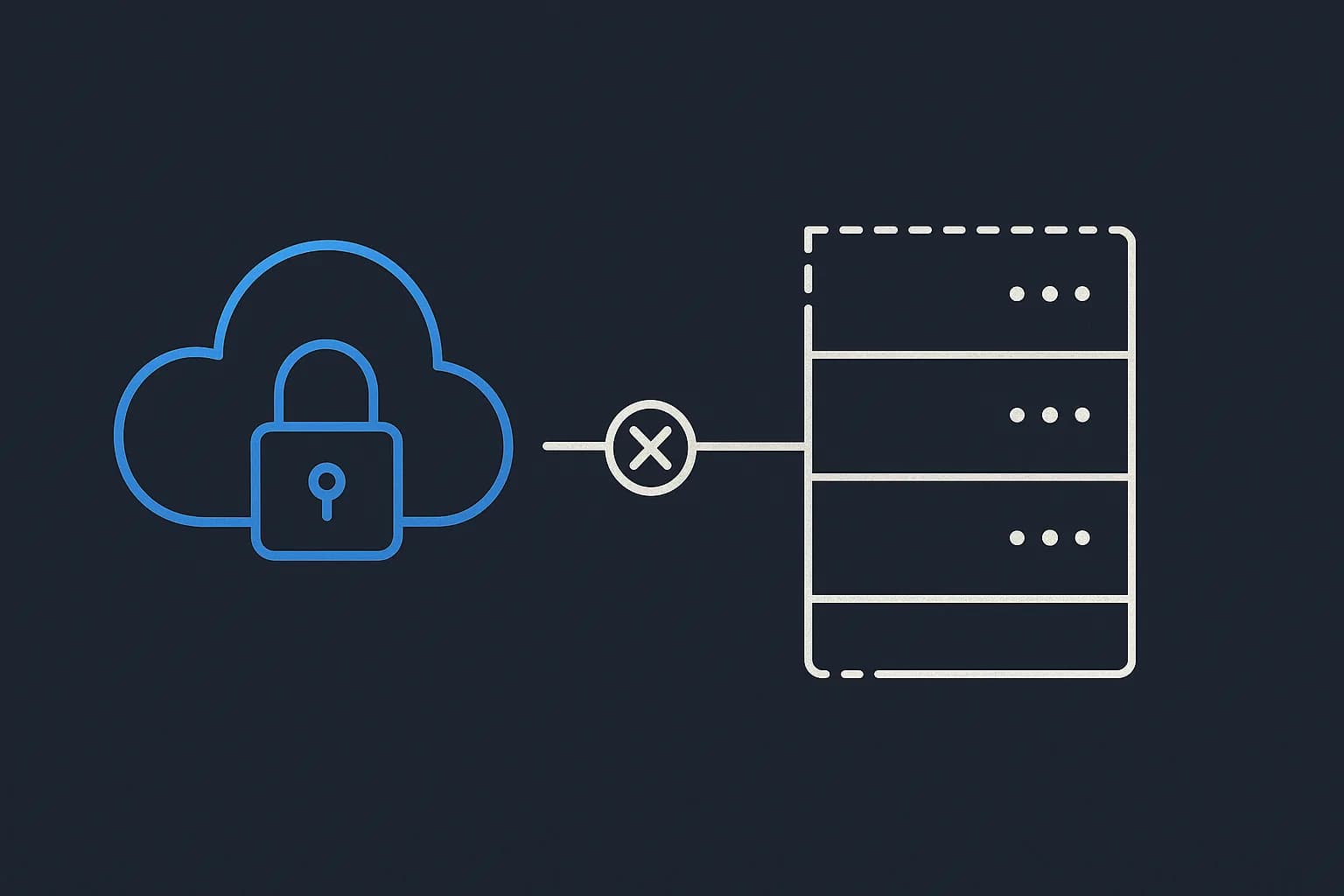
No. You can't self-host Storyblok. It's SaaS only. No on-premise option. No Docker image. No private cloud tier. The source is closed, and the only pieces on GitHub are the SDKs and field-type plugins. Buying an enterprise plan doesn't change this.
That's the whole answer. So the useful part of this guide is the next question: what were you actually trying to solve? People search "Storyblok self hosted" for three very different reasons, and only one of them needs self-hosting at all.
Can you self-host Storyblok?
No. There's no deployment artifact to host.
Storyblok runs on AWS infrastructure it operates. You get an account, a space, and API access. You don't get a binary, a container, or a Helm chart, because none exists outside their own systems.
This isn't a gap in their docs. It's the product decision. Storyblok is a managed service, priced and built as one. The visual editor is tied closely to their hosted setup.
What about the open-source parts?
Storyblok publishes plenty of code. JavaScript SDKs, framework integrations, field-type plugin scaffolding. All of it is client-side glue that talks to their API.
None of it is the CMS. You can read every repo they've published and still have nothing that stores an entry.
Does Storyblok host my website too?
No, and this trips people up. Their own FAQ is direct. "Storyblok offers a hosting for your CMS and your content and images." Then the important half: "However to publish your website you will need a hosting where your websites can be deployed."
So you're running two things regardless. Storyblok holds the content. Vercel, Netlify, or your own AWS account serves the site. That split is normal for any headless CMS. Worth knowing before you hunt for a self-hosting option you never needed.
Why do people want to self-host a CMS?
Three reasons, and they get mixed up constantly. Sorting yours tells you whether Storyblok is really ruled out.
Data residency and compliance
You need content stored in a specific country, because a regulator or a customer contract says so.
This usually doesn't need self-hosting. Storyblok offers regional data residency on AWS. Spaces run in Europe, the US, Canada, and Australia. There's a China region too. Several official client libraries don't support it, so check yours first. They hold ISO 27001 and SOC 2 Type II.
If your rule is "data stays in the EU," a Frankfurt-hosted space meets it. If your rule is "data stays on hardware we own," nothing SaaS will work, and that's a real constraint.
Region choice sits on their higher tiers. Price it before you assume it's included.
Cost control
You're worried about per-seat or per-entry pricing rising as the team grows.
Self-hosting rarely fixes this. You trade a subscription for engineering time. Engineering time is the pricier line. A self-hosted CMS needs upgrades, backups, monitoring, and someone who can restore it at 3am.
The honest version: self-hosting wins on cost at big scale. Or when you already run the servers and one more service is cheap. It loses for a five-person team.
Avoiding vendor lock-in
You want to leave later without rewriting everything.
This is the good reason. But self-hosting is a blunt tool for it. What sets migration pain is the shape of your content, not who runs the server.
Content stored as a vendor rich-text JSON tree is hard to move anywhere. Content stored as Markdown or MDX strings is portable by default. You can be locked in on self-hosted software, and portable on SaaS. The format decides it.
What headless CMS platforms can you self-host?
If self-hosting is a genuine requirement, these are the real options.
| Platform | License | Stack | Notes |
|---|---|---|---|
| Strapi | Open source | Node.js | The default answer. Large plugin ecosystem, mature admin UI. |
| Payload | Open source | Next.js | TypeScript-native, code-first config. Good fit if you're already on Next. |
| Directus | Open source | Node.js | Wraps an existing SQL database rather than owning the schema. |
Each gives you a container and a database you control. Each also hands you the upgrades, the backups, and the pager. That's the trade.
Want the cost breakdown? See free and open-source headless CMS options.
How do I get my content out of Storyblok?
Since lock-in is the reason most worth taking seriously, here's the practical answer.
Storyblok's Content Delivery API returns JSON. You can page through every story and write it to disk, which covers the raw export. That part is fine.
The friction is in the shape. Storyblok's rich text comes back as a nested JSON document, not Markdown. Moving it anywhere means writing a converter that walks that tree and maps each node type to whatever the next system wants. Bloks, their component fields, add a second layer of mapping.
So budget the migration in converter code, not in export calls. That's true of any CMS storing rich text as a vendor tree, and it's the strongest argument for checking the storage format before you sign, not after.
When is SaaS the right call anyway?
When your real constraint is data location, not ownership. A regional space solves that. You skip running a database.
When the team is small. Two engineers should not be maintaining a CMS deployment. Least of all during launch week.
And when your content is portable either way. Say your entries come out as plain MDX over an API. Then the cost of leaving stays low, hosted or not. That's the part worth engineering for.
Where to go from here
Storyblok can't be self-hosted. That's fine if what you needed was regional storage, or a low exit cost. Work out which of the three problems you have before you shop on hosting model. Data residency has a SaaS answer. Cost control usually doesn't improve. And lock-in is a content-format question in a server costume.
Is portability the real worry? Draftbase stores rich text as raw MDX strings, not a vendor tree. Your content leaves in the same format it went in. It's hosted, with REST and GraphQL delivery, environments, and revisions you can roll back. Hobby is free with no card, Startup is $49/mo. Weighing hosted against self-managed? Work through the headless CMS evaluation framework next.
Ship content that's built to be found
Draftbase generates schema, structured data, and a fast MDX editor for every post.
Frequently asked questions
Can you self-host Storyblok?
No. Storyblok is SaaS only. There is no on-premise build, no Docker image, and no private cloud tier. The source is closed, and only the SDKs and field-type plugins are on GitHub.
Does Storyblok host my website as well as my content?
No. Storyblok hosts your content and images, not your site. You still deploy the frontend somewhere else, such as Vercel, Netlify, or your own AWS account.
Does Storyblok offer data residency options?
Yes, on AWS. Spaces can run in Europe, the US, Canada, and Australia, which covers most residency rules without self-hosting. Region choice sits on the higher plans.
Which headless CMS platforms can be self-hosted?
Strapi, Payload, and Directus all ship as self-hosted, open-source platforms. Each gives you a container and a database you control, plus the upgrades and backups that come with it.
Is self-hosting a CMS cheaper than SaaS?
Usually not. You trade a subscription for engineering time, and that is the pricier line for a small team. Self-hosting wins on cost at large scale or when you already run the servers.
Working with this hands-on? Draftbase also has a free supabase rls checker.