
Contentstack Alternatives for React Developers
Contentstack hides its price behind a sales call, with heavier setup too. See four React CMS picks with public pricing instead.
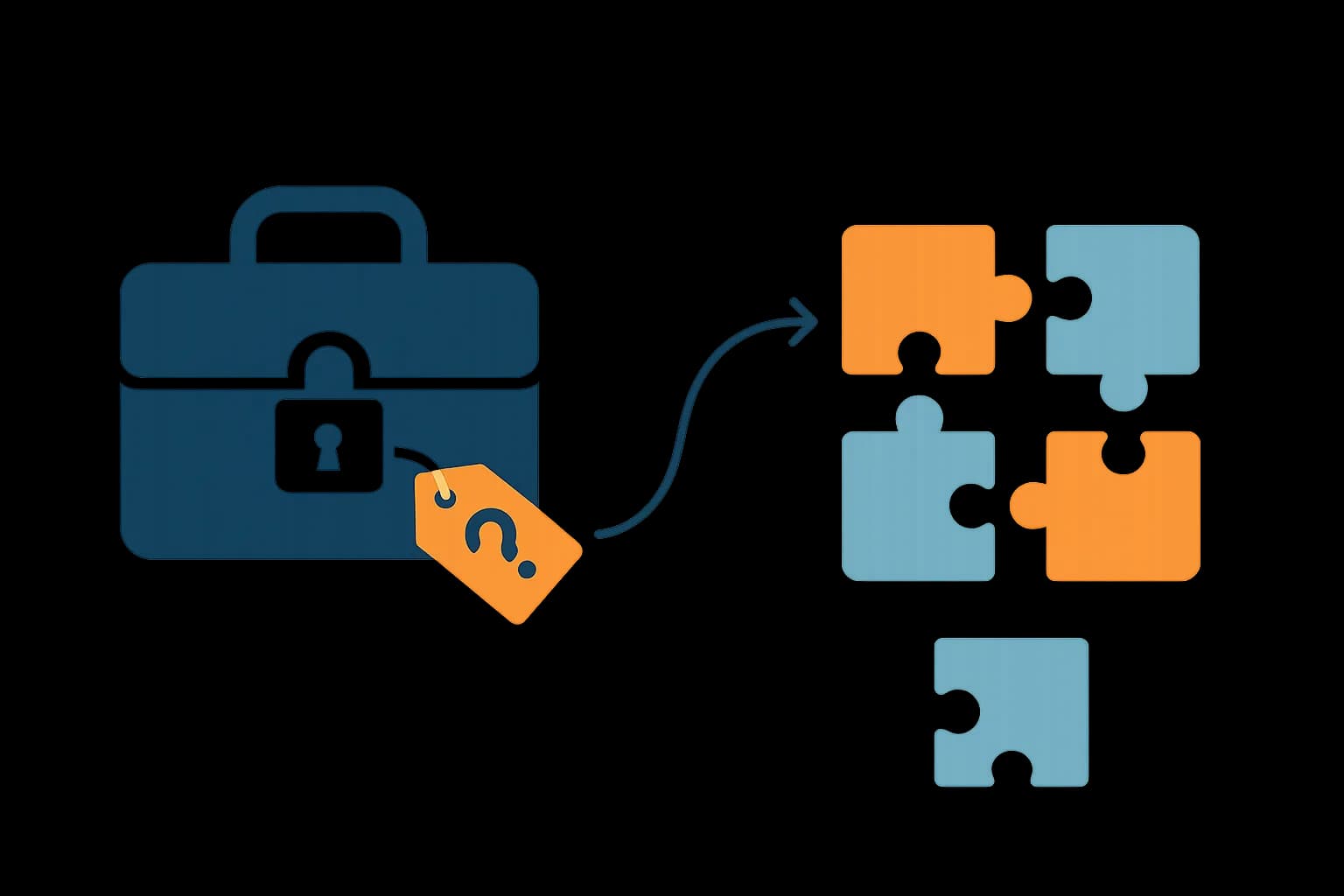
Contentstack is built for large organizations that need content control across many brands and locales. If your team just wants a fast headless CMS API, four picks skip one thing Contentstack requires: Sanity, Strapi, Payload, and Draftbase. None of them make you sit through a sales call before you see a price.
Why developers look for a Contentstack alternative
Contentstack has no public pricing. Every quote comes from a sales call. Entry-level contracts start around $3,500 a month. Costs climb into six figures a year once API volume, brands, or locales scale up. That's a real cost before a single line of code ships. It rules Contentstack out for a small team that wants to try a CMS on a Tuesday afternoon.
Setup carries its own weight too. Reviewers describe entry relationships as confusing at first. Search is hard to use without training. Onboarding often leans on Contentstack's own support staff, since a subtle setup mistake can cost a project weeks. That's a normal tradeoff for a platform built around multi-brand approval rules. It's a heavy price for a team that only needs a content model and a delivery API. A one-brand blog pays the same setup tax as a ten-brand retailer. It never touches the tooling that tax buys.
What does Contentstack onboarding actually involve?
A new Contentstack project starts with a sales conversation, not a signup form. That call scopes the contract to your API volume, brand count, and support tier. None of those three have a public price. Setup then moves to content-type modeling, workspace and role setup, and often localization settings. Reviewers flag all three as easy to get wrong the first time.
None of that is a knock on the product. Contentstack's own support team exists partly to walk customers through it. Large organizations often want that hand-holding, since many teams end up depending on the same platform. It's the wrong shape for a two-person team validating an idea. A free-tier signup and a working API key in minutes fits that case better. That's the model Sanity, Strapi, Payload, and Draftbase all use. Weigh which onboarding model matches the team actually doing the work before signing a contract sized for a much bigger one.
Sanity
Sanity is the closest match here. It offers deep content modeling without the sales-quote gate. GROQ resolves nested references in one query. The free tier covers real projects before any seat cost kicks in. The tradeoff is real too: rich content saves as Portable Text, Sanity's own JSON tree. Every frontend needs a custom renderer before that content shows up as HTML or React components.
Strapi
Strapi is MIT-licensed and free to self-host. Its content-type builder needs no code at all. Strapi Cloud starts around $18 a month if self-hosting isn't worth the time, a fraction of Contentstack's entry contract. It has no Contentstack-style multi-brand workflow tooling built in. A small team rarely misses that. A large publishing org sometimes does.
Payload
Payload defines its schema in TypeScript, so a field change reviews like a pull request, not a change ticket. Self-hosting is MIT-licensed and free. Payload's admin panel is a Next.js app you can extend directly, not a separate product to learn. Managed Payload Cloud starts at $35 a month. There's no multi-brand workspace model here. A team running ten regional sites under one shared approval layer will feel that gap.
Draftbase
Draftbase's richText fields store MDX as a plain string, not a vendor JSON block tree. A paragraph and a custom <PricingTable /> component compile through the same @mdx-js/mdx pipeline. @draftbase/renderer renders the result as a React Server Component. That's one rendering layer to maintain. It also sidesteps a resolver problem. Contentstack's own JSON Rich Text Editor needs a custom plugin for every block type. Without one, that block won't render correctly anywhere else.
Pricing is public on the pricing page: a free Hobby tier, then $49 and $299 a month for Startup and Growth. No sales call needed to see a number. The typed SDK generates a <TemplateName>Fields interface per content template. A field rename fails a TypeScript build instead of breaking a production render. Draftbase has no multi-brand approval layer and no built-in localization workflow yet. A large enterprise with strict content-approval chains across many regions is still better served by Contentstack.
Does Contentstack offer a free trial?
Contentstack doesn't list a self-serve free trial on its site. Access comes through a demo request, which routes to the same sales process that sets your eventual contract price. That's different from Sanity's free tier, Strapi and Payload's free self-hosted option, or Draftbase's free Hobby plan. Each of those gives you a working project in minutes, no call needed.
A demo isn't a bad way to see the product. It's a slower way to answer a simple question: does this content model fit my project? Testing that question against a free tier, on your own schedule, catches a bad fit before any contract talk starts. It also means the evaluation itself costs nothing beyond your own time. That matters most for a team that isn't sure yet whether Contentstack even fits what they're building.
When is a Contentstack alternative overkill?
Not every Contentstack customer should leave. Picture a retailer running a dozen regional storefronts. Each has its own editors, brand rules, and legal review step. Budget is already set aside for an enterprise contract. That control layer is doing real work worth paying for. The switch makes sense when the real content model is simpler than the platform. One brand. A handful of content types. A team that wants to see pricing before booking a call. All three point away from Contentstack. So does a founder who wants to ship a working demo before payroll clears next Friday. Check how to choose a headless CMS against your own content shape first. Don't pick a replacement on price alone.
Contentstack alternatives compared
| Platform | Pricing model | Self-host | Rich text format | Entry price |
|---|---|---|---|---|
| Contentstack | Sales quote only | No | Proprietary JSON blocks | ~$3,500/mo |
| Sanity | Public, seat-based | No | Portable Text (JSON) | Free tier, then $15/seat/mo |
| Strapi | Public | Yes, MIT | HTML or JSON | Free self-hosted, ~$18/mo cloud |
| Payload | Public | Yes, MIT | Rich text JSON (Lexical) | Free self-hosted, $35/mo cloud |
| Draftbase | Public | No | Plain MDX string | Free Hobby tier, $49/mo Startup |
The underused angle: opaque pricing and rich-text lock-in are the same problem
Most Contentstack comparisons treat sales-quote pricing and the vendor rich text field as separate complaints. They're really the same shape of problem. A price you can't see until a sales call means you can't budget a proof of concept. A procurement cycle has to run first, even for a two-week prototype. A rich text field stored as vendor JSON blocks works the same way. You can't test content portability without writing a serializer first. Both hide the real cost of adoption until after a team has already spent time judging the platform. A plain MDX string or a published price list moves that cost earlier, before the decision, not after it.
Which one to pick
Pick Sanity if GROQ's reference joins matter, and Portable Text's custom renderer is a cost you'll accept. Pick Strapi or Payload if self-hosting is a need and MIT licensing fits your budget. Pick Draftbase if the content is mostly MDX-shaped already. A typed SDK plus public pricing should matter more to you than Contentstack's multi-brand tools. Start free on the Hobby plan. No sales call required. See whether a plain content API covers what the enterprise contract was actually paying for.
| Option | Verdict | Pros | Cons |
|---|---|---|---|
| Contentstack | Best when a large org needs multi-brand governance, strict approval workflows, and localization at scale, and has budget for an enterprise contract. |
|
|
| Payload | Best for a self-hosted, code-first schema with no per-seat or sales-quote pricing at all. |
|
|
| Draftbase | Best for MDX-heavy content with a typed SDK and public pricing, if you don't need Contentstack's multi-brand governance layer. |
|
|
Ship content that's built to be found
Draftbase generates schema, structured data, and a fast MDX editor for every post.
Frequently asked questions
What is the best Contentstack alternative for React developers?
Sanity is the closest match for deep content modeling, with no sales call needed. Draftbase is the closest match for MDX content and a typed SDK. Both list their prices in public.
Why does Contentstack not publish its pricing?
Contentstack sells to large firms with different needs: API volume, brand count, and support level all vary. Each buyer gets a custom quote. Entry deals start near $3,500 a month.
Is there a free alternative to Contentstack?
Yes. Strapi and Payload are both free to self-host under an MIT license. Sanity and Draftbase each offer a free hosted tier with no card required.
Does Draftbase support the omnichannel features Contentstack has?
Not yet. Draftbase has no multi-brand approval layer and no built-in translation workflow. A big firm with strict approval steps across many regions is still better off with Contentstack.
How much does Contentstack cost per month?
Contentstack lists no public price. Entry deals start near $3,500 a month, per Vendr's pricing data. Costs rise from there with more API calls and more brands.
Working with this hands-on? Draftbase also has a free supabase rls checker.