Headless CMS Development: Build In-House, Hire an Agency, or Use a Platform
Headless CMS development, priced out. See when to build in-house, hire an agency, or pick a platform, plus real 2026 cost ranges.
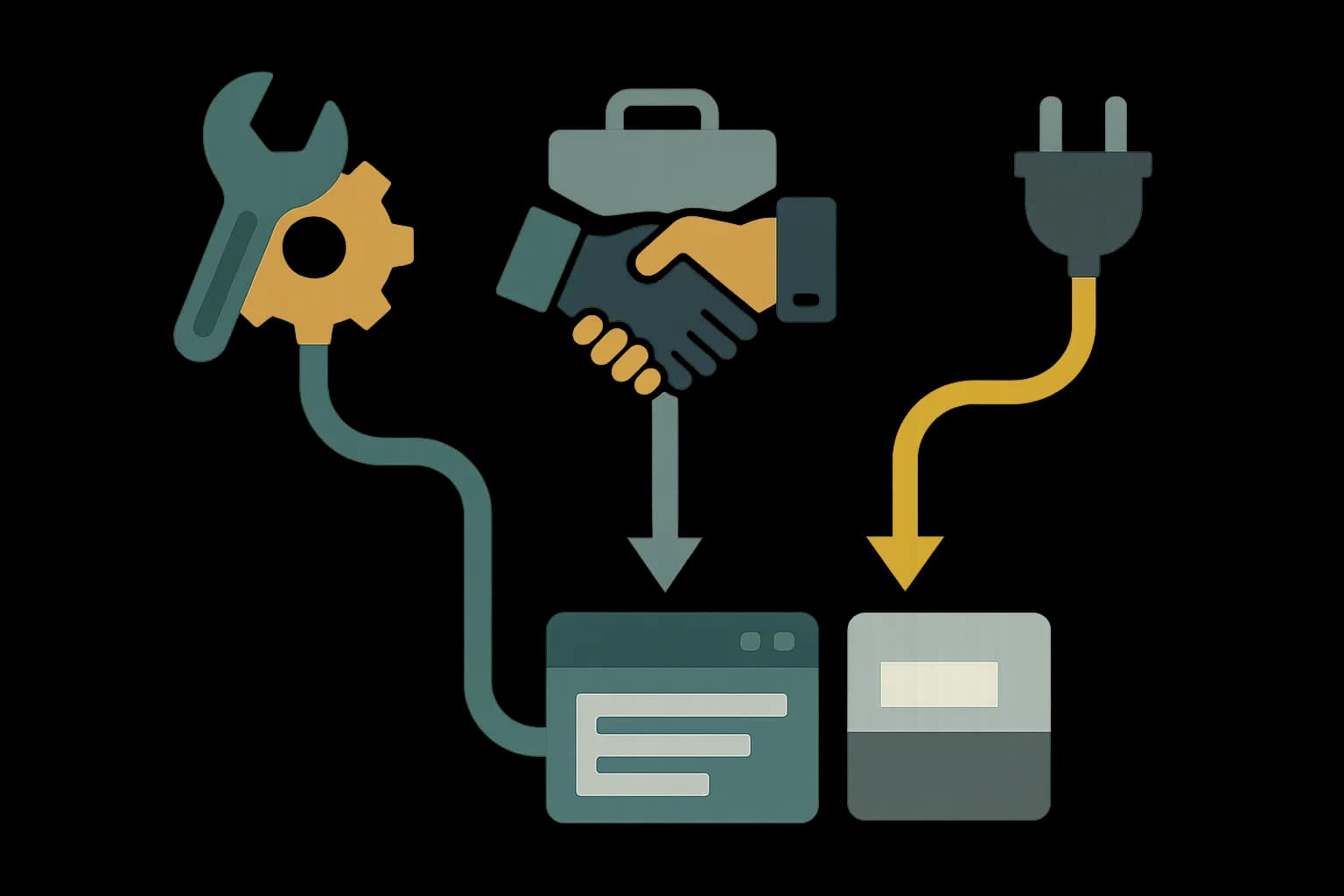
Build in-house only with spare capacity and a genuine custom need. Hire an agency for design-heavy work or a legacy migration. Pick a platform for the majority case: a standard content site where developer time is better spent on the frontend.
Headless CMS development costs $18,000 to $50,000 for a standard project, and $50,000 to $150,000 for a mid-size platform with custom integrations (ZTABS). That range is why the build-vs-hire-vs-platform decision matters. Get it wrong and you either overpay an agency for commodity work, or under-budget an in-house build that stalls for months.
This guide is for the buyer already weighing a quote, not the one still learning what a headless CMS is or needing a definition and overview of how it works. Three paths exist: build in-house, hire an agency, or adopt a hosted platform. Each wins under a different set of conditions.
What Does "Headless CMS Development" Actually Involve?
A headless CMS project has three real cost centers, not one. First, the content model: defining what a "page," "product," or "article" contains as typed fields. Second, the integration layer: wiring the delivery API into your frontend's build or render pipeline. Third, the admin experience: giving editors a usable interface, which a raw API alone never provides.
Agencies typically quote all three together. A platform like Draftbase ships the third one, the admin UI, already built, so what you're actually paying for elsewhere is the first two.
When Building In-House Makes Sense
Build in-house when your team already has spare engineering capacity. The project also needs a genuine reason to be custom. An unusual content model. A non-standard delivery need. Or deep integration with an internal system a platform can't reach.
The real cost isn't the initial build. It's the maintenance tax: security patches, dependency upgrades, and the admin UI nobody budgeted time for after launch. Teams that skip building an editor UI end up with developers hand-editing JSON files months later, which is its own hidden cost.
Typical in-house line items:
- Content model + schema design: 1-3 weeks
- API integration: 1-2 weeks
- Admin UI (often skipped, then regretted): 3-6 weeks
- Ongoing maintenance: indefinite
When Hiring an Agency Genuinely Wins
An agency is the right call in three cases. Design-heavy work that needs a dedicated designer alongside a developer. A team with no in-house developer at all. Or a migration off a legacy CMS, where the agency's prior migration experience shortens the timeline.
North American agency rates run $120-$180/hour, with Eastern European shops closer to $60-$120/hour for comparable technical depth (ZTABS). That rate gap is real, and it's worth shopping across regions before committing to a quote, not just across vendors in one region.
Where an agency quote hides commodity work
Watch for a quote that bills full custom-development rates for tasks a platform already solves. Building a rich text editor. Wiring up media upload and image processing. Building draft/publish workflows from scratch. Those are commodity problems in 2026, not custom engineering.
When a Platform Is the Right Call
Pick a hosted platform when your developer's time is better spent on the frontend, not on rebuilding a CMS admin. This is the majority case. Most teams have exactly one developer touching content infrastructure. That developer's hours are worth more building product than building a WYSIWYG editor from scratch.
Draftbase covers the admin UI, revisions with rollback, scheduled publishing, and a typed SDK with codegen out of the box. The remaining work is content modeling and frontend integration. Those are the same two line items an agency would still bill you for.
// Typed SDK output from draftbase-sync — no custom admin build required
interface BlogPostFields {
  title: string;
  slug: string;
  content: string;
  faqItems?: unknown;
}
What About Headless WordPress Development Specifically?
A fourth path shows up in search results but not in most build-vs-buy guides. Keep WordPress as a backend and expose it headlessly through WPGraphQL or the REST API. This isn't really a fourth option, it's a variant of "build in-house," with WordPress's plugin ecosystem as the tradeoff.
It fits one narrow case well. A team with existing WordPress content, and editors already trained on the WordPress admin, who want a faster frontend without a full migration. Outside that case, it adds WordPress's own maintenance burden on top of the headless integration work: core updates, plugin conflicts, security patches. That's the opposite of what most teams are trying to reduce.
If your content isn't already in WordPress, this path rarely wins against a purpose-built headless platform. Migrating content twice, once out of a legacy CMS and again out of WordPress later, costs more than picking the right target the first time. See the full migration guide if that's the actual project.
How Do I Decide Between the Three?
Start with one question: does a developer on your team have spare time this quarter? If no, a platform or an agency wins over in-house by default, since "we'll get to it" is how CMS projects stall.
If yes, ask whether the project actually needs custom work. A genuinely unusual content model or a deep internal integration justifies in-house or an agency. A standard blog, docs site, or marketing site with typed content does not, no matter how the requirements doc frames it. The platform evaluation framework covers the criteria once you've picked "platform" as the path.
The Underused Angle
Almost every build-vs-buy comparison stops at cost and skips the exit cost. An in-house build has no vendor lock-in. But the code itself becomes the thing you're locked into. It's undocumented, and understood only by whoever left the company. An agency build has the same problem plus a bus factor of zero once the contract ends.
A hosted platform's lock-in is visible and priced upfront. A monthly bill. Published pricing. On a platform with real export support, a documented way out too. That's a smaller, more honest cost than the invisible lock-in of a codebase nobody remembers building.
When Is an Agency Still the Honest Answer?
If your project genuinely needs custom design work, an agency with a dedicated designer beats any platform's templates for a brand-heavy marketing site. No platform closes that gap with a theme picker. That's the one case worth paying full agency rates for, design, not CMS plumbing.
Conclusion
Build in-house for genuine custom requirements and spare capacity. Hire an agency for design-heavy work or a legacy migration. Choose a platform for the majority case: a standard content site where a developer's time is worth more on the frontend than on rebuilding a CMS admin. If that's your situation, Draftbase starts free on the Hobby plan, no card required. The platform-vs-build math is one signup away from real numbers instead of a guess.
Ship content that's built to be found
Draftbase generates schema, structured data, and a fast MDX editor for every post.
Frequently asked questions
How much does headless CMS development cost?
Standard projects run $18,000 to $50,000. Mid-size platforms with custom add-ons run $50,000 to $150,000. The exact price depends on content volume and how many systems it connects to.
Should I build a headless CMS in-house or hire an agency?
Build in-house only with spare developer time and a genuinely custom need. Hire an agency for design-heavy work, or a migration off a legacy CMS.
Is a headless CMS platform cheaper than an agency?
Usually, yes, for a standard content site. A platform's admin UI, revisions, and typed SDK ship built-in. An agency would otherwise bill for that same work.
Does headless WordPress count as a fourth option?
Not really. It's a variant of building in-house. You still maintain WordPress core and plugins on top of the integration work.
When does an agency genuinely win over a platform?
When the project needs dedicated design work. No CMS platform's templates replace a designer for a brand-heavy marketing site.
Where do I hire CMS developers?
The same places you'd hire an agency for headless CMS work, covered above: North American shops running $120-180/hour, Eastern European teams closer to $60-120/hour for comparable depth. Shop the rate gap across regions, not just across vendors in one region, before committing to a quote.
Samer is a software engineer and entrepreneur, founder of Draftbase and Ezi Home Services, building technology that simplifies home services. Passionate about software, APIs, automation, and creating products that solve real-world problems.