Using Company Data for Sales Personalization
Company data describes a business, not a person. See what it covers and how sales teams use it to write outreach that fits.
Company data (firmographic data) sets a fit baseline before intent data. Real personalization changes the pitch itself, not just the greeting, and stale data is the most common failure.
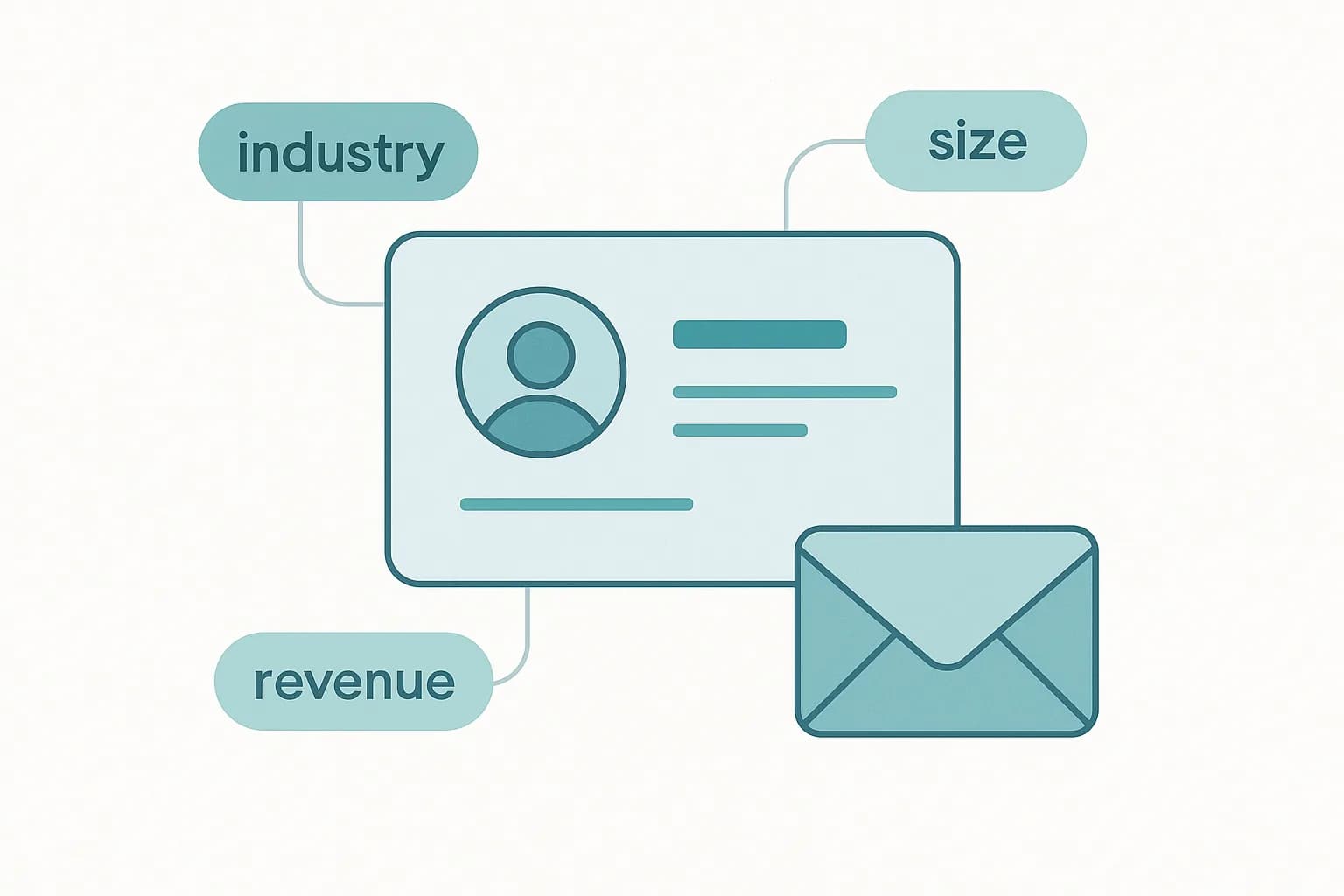
Company data, also called firmographic data, describes a business rather than a person. Industry, headcount, revenue, location, tech stack. Sales teams use it to answer one question first. Is this company worth a call at all? This guide covers what company data actually includes. And how sales teams turn it into outreach that isn't just a mail-merge with a logo swapped in.
What Company Data Actually Includes
Firmographic data covers the traits that describe an organization, not an individual inside it. Core attributes include industry, headcount, revenue, location, and whether a company is public, private, or VC-backed. A second layer, often called technographic data, adds what software and infrastructure a company runs. Its CMS, its cloud provider, its CRM. That layer matters most for B2B software sales. "Do they already use a rival tool" is often the single best signal in the whole dataset.
The comparison people reach for: firmographics are demographics for a business. Age and income describe a person. Headcount and revenue describe a company. The parallel holds well enough to be useful. It's why the same segmentation logic shows up in both. A sales team targets companies the way a marketer targets people.
Why Firmographic Fit Comes Before Intent
A sales team with a long prospect list has two real problems. Are these the right companies? Are they buying right now? Firmographic data answers the first. It sets a baseline fit score. Does this company match the size, industry, and revenue range of a business's best customers? Intent data (site visits, content downloads, search behavior) answers the second, layered on top of that baseline.
Skipping straight to intent data without a fit baseline is a common mistake. A company showing strong buying signals but the wrong size or industry is still a bad fit. It just looks urgent. Fit filters the list down to companies worth acting on at all. Intent tells you which of those companies to act on first.
Turning Company Data Into Personalized Outreach
Firmographic data on its own is a filter, not a message. The personalization comes from what a sales team does with it. Reference a company's actual industry in an opening line, instead of a generic template. Size a pitch to a company's headcount; an enterprise pitch reads wrong sent to a 12-person startup. Name a pain point common to that industry, not a generic one. None of that requires guessing. It requires having the data in front of the person writing the email.
The failure mode is obvious once named. Outreach that inserts {{company_name}} into a template isn't personalized, it's a mail merge. Real personalization changes the actual argument being made, not just the name on the greeting line. A pitch to a healthcare company should reference compliance concerns a retail company never has. A pitch to a 5,000-person enterprise should reference procurement and integration timelines a 20-person startup doesn't deal with.
Where the Data Comes From
Company data comes from a handful of sources, usually combined. A firmographic data provider (ZoomInfo, Clearbit, Apollo) matches a domain or company name to a maintained database. A company's own website often exposes a chunk of it directly. An About page states headcount and industry. A careers page implies growth stage. A tech-stack detection tool reads what's running in the page's own source. A CRM accumulates firmographic fields over time as reps manually enter or confirm them during calls.
None of these sources update in real time on their own. A company's headcount from six months ago might already be stale after a hiring freeze or a layoff. Treat firmographic data as directionally accurate, refreshed periodically, not as a live feed.
What Goes Wrong When Firmographic Data Is Stale
The most common failure isn't missing data. It's old data treated as current. A sales rep mentions a company's Series B funding. The email goes out eighteen months after that company raised a Series C. A pitch assumes a 50-person team that's since grown to 300. Both mistakes read as worse than generic outreach. They signal the sender didn't check, not just that they skipped personalizing.
The fix is a refresh cadence, not a bigger initial data pull. Firmographic providers typically update their records monthly or quarterly. A CRM should sync against that cadence, not rely on a one-time import from months ago. For high-value accounts, a quick manual check helps. The company's own site, LinkedIn, a recent press release. It catches what an automated refresh cycle hasn't caught yet.
Where Content Systems Fit In
Company data lives in a CRM or a sales tool, not in a CMS. But the landing pages, case studies, and emails a sales team sends often do live in a CMS. That's where the two systems meet. A sales team wanting to send a healthcare case study, or a startup pricing page, needs a content system that can serve the right variant. That's the same content personalization pattern used on the marketing side. The company data decides who gets which version; the content system holds the versions themselves.
Conclusion
Company data describes a business, not a person: industry, size, revenue, tech stack. It sets a fit baseline before intent data says who's buying now. It powers personalization only when a sales team actually changes the pitch, not just the greeting. Stale data is the most common failure, worse than no personalization at all. The content itself, not just the targeting, is often the real bottleneck. A headless CMS built around content variants makes serving the right version to the right account possible. No page per account needed.
Ship content that's built to be found
Draftbase generates schema, structured data, and a fast MDX editor for every post.
Frequently asked questions
What is company data in sales?
It's data about a business, not a person. Its industry, size, revenue, and what tools it uses.
How is company data different from personal data?
Personal data describes a buyer. Company data describes the business that buyer works for.
Why check company data before intent data?
Company data tells you if a business is a good fit. Intent data tells you if they're buying now. Fit comes first.
Where does company data come from?
A data vendor, a company's own site, or fields a rep fills in over time. Most teams blend all three.
How often should company data be refreshed?
Most vendors update records each month or quarter. An old record can be worse than no record. Treat it as a hint to check, not a fact.
Samer is a software engineer and entrepreneur, founder of Draftbase and Ezi Home Services, building technology that simplifies home services. Passionate about software, APIs, automation, and creating products that solve real-world problems.