
Demographic vs Geographic Segmentation: A Primer
Demographic segmentation groups people by who they are. Geographic segmentation groups them by where they live. See the real gap, and how to use both.
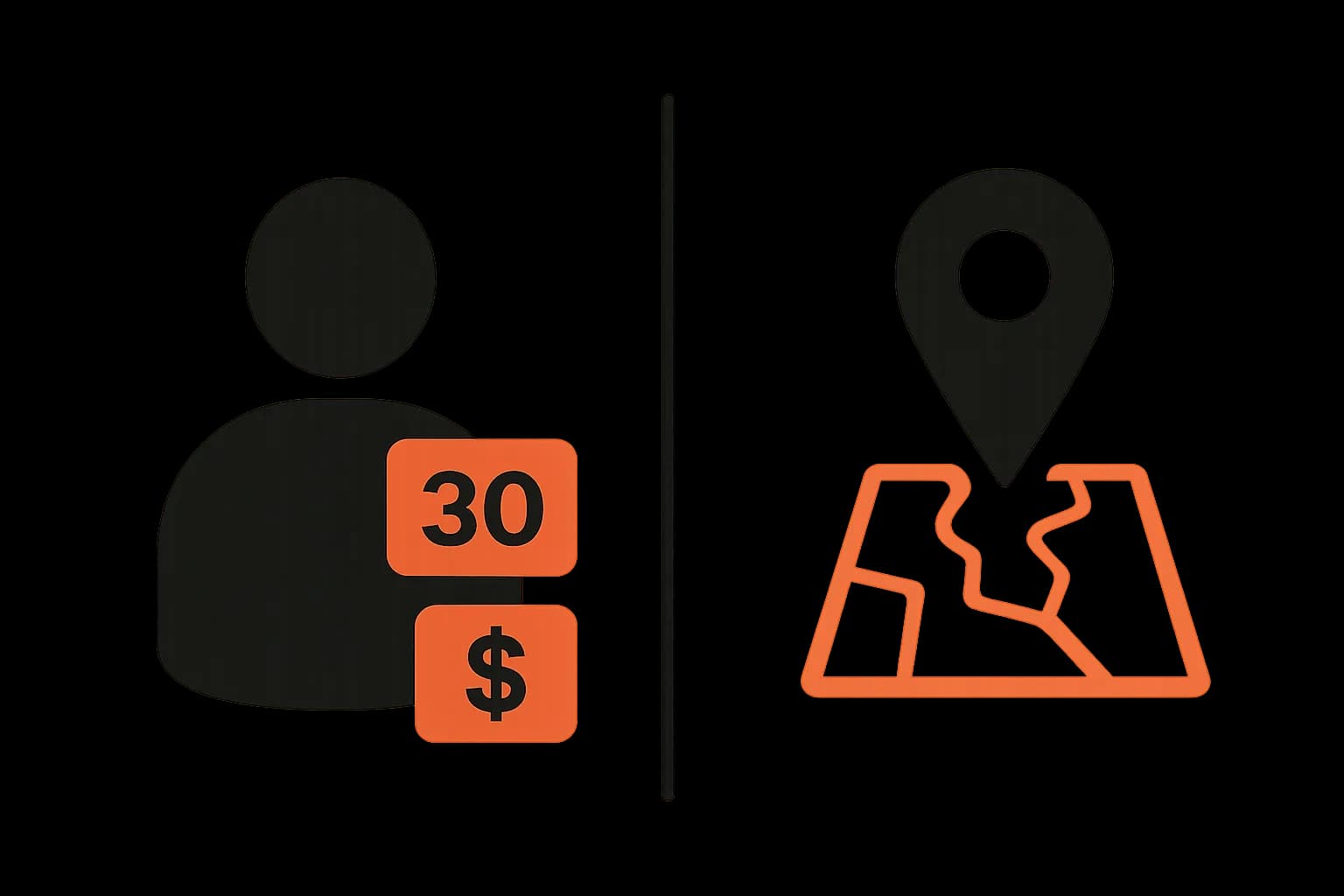
Demographic segmentation groups people by trait, geographic segmentation groups by location, and most real strategies need both plus behavioral data. Serving different content per segment then depends on a content model built for variants, not a separate page per group.
Demographic segmentation groups people by who they are. Age, income, gender, occupation. Geographic segmentation groups people by where they are. Country, region, climate. Both split an audience into smaller groups. But they answer different questions. Mixing them up leads to campaigns built on the wrong axis.
Demographic Segmentation: Who the Customer Is
Demographic segmentation sorts an audience by traits you can count. Age bracket, income range, education level, family size, occupation. It's the oldest and most common form of segmentation. The data is easy to collect and easy to act on. A retailer offering student discounts is segmenting by age and income. A financial firm building separate messaging for first-time homebuyers versus retirees is segmenting by life stage, a demographic trait.
The strength of demographic segmentation is its simplicity. Age, income, and household size show up in almost every dataset a business already holds. Purchase records, sign-up forms, ad platform targeting options. The weakness is that it says nothing about intent. Two 35-year-olds with the same income can want completely different things. Demographic data groups people who share a trait, not people who share a reason to buy.
Geographic Segmentation: Where the Customer Is
Geographic segmentation sorts an audience by location. Country, state, city, zip code, or climate zone. It matters wherever a product's fit changes with place. A clothing brand adjusts its lineup for a cold-climate region versus a warm one. A fast-food chain changes its menu by country to match local taste. A retail chain runs different promotions in urban stores than in rural ones. Foot traffic and competition differ by location. See more patterns like these in these headless CMS examples.
Geographic segmentation covers things demographic data can't reach. Time zone for send-time timing. Local rules for what a business can even offer. Shipping cost by distance from a warehouse. It answers "where." It's often the first layer applied. Location data comes straight from an IP address or a shipping form. No extra question needed.
The Core Difference
Demographics describe a person. Geography describes a place. A demographic segment, like "women aged 25 to 34," can span every country a business sells in. A geographic segment, like "customers in Texas," spans every age and income bracket in that state. Neither implies the other. That's the test for which one applies. Is the trait about the person, or about their location?
Most real segmentation plans use both together. Plus two further layers: psychographic (lifestyle, values) and behavioral (past purchases, engagement). A demographic-geographic mix, like "parents in suburban zip codes," is common. The two axes are independent, and they stack cleanly. Neither replaces the other. They narrow an audience from two different directions.
Where Segmentation Data Actually Comes From
Demographic data usually comes from a sign-up form or a loyalty program. Sometimes it comes from a third-party data provider matched to an email or account. Geographic data usually comes from an IP address, a shipping address, or a device's reported location. None of that needs the customer to fill out a form. That's part of why geographic segmentation often goes first. It's known before a customer tells you anything about themselves.
Neither source is perfect. Self-reported demographic data goes stale over time. A person's income or family status changes. Third-party demographic data has real accuracy limits too, especially at the individual level rather than the group level. Geographic data from an IP address can be wrong for VPN users or shared office networks. Treat both as a rough guide, not an exact fact.
Why Segmentation Fails Without Behavior Data
Demographic and geographic segments are a starting point, not a finish line. They group people by fixed traits: who someone is, where they live. Neither one tells you what a person actually wants right now. A 40-year-old in Chicago might be a brand-new shopper. Or a ten-year loyal customer. Demographic plus geographic data alone can't tell the two apart.
This is where behavioral data closes the gap. Past purchases, pages viewed, emails opened, cart abandonment. None of it is fixed like age or zip code. It changes as a person acts. That makes it a better signal for what to show someone right now. It just takes longer to collect than a form field or an IP lookup. A campaign built only on demographic and geographic segments tends to feel generic. It describes a group. It never learns what that one person actually did.
Turning a Segment Into Different Content
Picking a segmentation plan is only half the job. The other half is serving different content to each segment, and that's where the plan often breaks down. A marketing site built around one static homepage can't do that. It can't show a different hero banner to two different segments. That takes a content model built to hold more than one version of a page section. It also takes a way to pick the right version at request time.
This is the same problem content personalization solves at the CMS layer. Store content in versions. Let the app decide which version to serve, based on the visitor's segment. A geographic segment might swap in a regional promotion. A demographic segment might swap in different product picks. The segmentation plan decides which groups exist. The content system decides what each group actually sees. Choosing the right CMS for this ahead of time avoids rebuilding the content model later.
Conclusion
Demographic segmentation groups by trait. Geographic segmentation groups by location. A real strategy usually needs both. Plus behavior and lifestyle layers, to explain why a group buys, not just who or where they are. The harder problem, once the segments are set, is building content to match them. A headless CMS with a content model built for variants makes that second step possible. No separate page per segment needed.
Ship content that's built to be found
Draftbase generates schema, structured data, and a fast MDX editor for every post.
Frequently asked questions
What is the main difference between demographic and geographic segmentation?
One groups people by who they are, like age or income. The other groups them by where they live.
Can you use both types of segmentation together?
Yes, and most real plans do. The two traits are separate. They combine well, like "parents in suburban zip codes."
Is location data easier to collect than demographic data?
Often, yes. It can come from an IP address or a shipping form. No extra question needed.
Why does segmentation need behavior data too?
Traits like age and city describe a group. They don't show what a person wants. Past clicks and buys do.
How do you serve different content to different segments?
A content model built for variants lets an app swap in the right version per group. No separate page needed.
Samer is a software engineer and entrepreneur, founder of Draftbase and Ezi Home Services, building technology that simplifies home services. Passionate about software, APIs, automation, and creating products that solve real-world problems.